
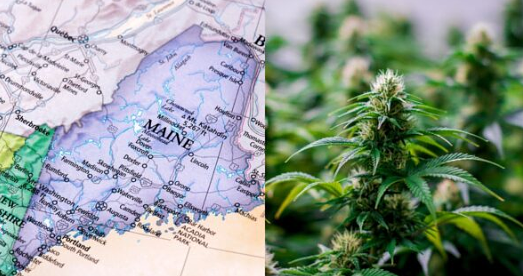
The fight to protect Maine’s voter-approved recreational cannabis market has entered a new phase. While we previously reported on the emerging threat of a repeal initiative, the situation has escalated from a theoretical proposal to a tangible political campaign.
The Maine Secretary of State has officially authorized the collection of signatures for a citizen initiative that seeks to dismantle the state’s adult-use marijuana industry. This is a direct attack on the will of the voters who legalized recreational cannabis in 2016 and poses a severe threat to hundreds of small businesses across the state.
This is not merely a call for tighter regulations or adjusted tax rates. It is a wholesale attempt to roll back history. The approval to circulate petitions means that organizers can now hit the streets to gather the support needed to place this question on a future ballot.
The Path to The Ballot is Now Open
The Maine Secretary of State’s office has formally approved the petition language, clearing the way for proponents to begin their campaign in earnest. To qualify for the ballot, organizers must collect 67,682 valid signatures from registered voters by early February 2026.
This represents 10 percent of the total votes cast in the last gubernatorial election, a significant hurdle but one that organized political operatives are actively working to clear. If they succeed in reaching this threshold, the question of repealing legalization will be put directly to the voters, reopening a debate that was settled nearly a decade ago.
The initiative, titled “An Act to Amend the Cannabis Legalization Act and the Maine Medical Use of Cannabis Act,” is not a grassroots uprising of concerned citizens but appears to be a coordinated effort involving former government officials and political operatives.
If passed, the measure would sunset the adult-use cannabis industry on January 1, 2028. It would strip away the licenses of recreational retailers, cultivators, and manufacturers, forcing them to either shut down or attempt a complex and uncertain transition into the medical market.
While the initiative would allow adults to continue possessing up to 2.5 ounces of cannabis, it would eliminate the legal means to purchase it commercially.
Furthermore, it seeks to repeal the provision that allows for personal cultivation of cannabis plants, stripping away a right that is fundamental to the ethos of Maine’s cannabis culture. By removing the legal avenues for purchase and personal growth, the initiative effectively pushes consumers back toward the illicit market, undermining the very public safety goals proponents claim to support.
Even GOP Candidates Call the Maine Recreational Cannabis Repeal “Really Dumb”
The push to repeal legalization is so disconnected from economic reality that it has drawn sharp criticism from unexpected corners of the political spectrum. David Jones, a Republican gubernatorial candidate, recently made a Facebook post slamming the initiative in no uncertain terms.
In a candid assessment of the situation, Jones implored voters not to sign the petition, labeling the entire effort “really dumb.” His opposition highlights that the defense of the legal cannabis market is not a partisan issue but a matter of economic common sense and pragmatic governance.
Jones argued that the state should be focusing on legitimate problems rather than dismantling a successful legal industry. He pointed out that tens of thousands of Mainers use cannabis legally and that entrepreneurs have invested their life savings to build compliant businesses.
By shutting down the regulated market, the state would be effectively handing control back to illicit operators, including the “illegal Chinese grows” that Jones and many law enforcement officials have identified as a genuine problem. Repealing the legal market removes the safeguards, testing, and tracking that currently exist, creating a chaotic environment where unregulated products thrive.
This sentiment is shared by State Representative David Boyer, another Republican who has been vocal in his opposition to the repeal. Boyer, who was instrumental in the 2016 legalization campaign, warned that signing away Maine’s progress would be a disastrous mistake. He contextualized the sheer scale of the industry by noting that cannabis sales in Maine are now bigger than the lobster, potato, and blueberry industries combined.
To dismantle an economic engine of that magnitude is not conservative policy; it is economic sabotage that would cost the state jobs, tax revenue, and growth.
Economic Suicide For Maine
The financial implications of this repeal effort cannot be overstated. Since the launch of adult-use sales, Maine has seen a steady increase in revenue, with sales reaching nearly $244 million in 2024. This money circulates through local economies, supports ancillary businesses, and generates significant tax revenue for the state.
The industry supports thousands of jobs, from cultivation and retail to security and compliance. Eliminating the adult-use market would result in an immediate and catastrophic loss of employment for these workers and a significant reduction in state revenue.
Proponents of the repeal argue that existing adult-use businesses could simply transition to the medical market. The initiative proposes a “streamlined” process for this conversion, overseen by the Office of Cannabis Policy.
However, this suggestion ignores fundamental differences between the two markets. Forcing hundreds of recreational businesses into the medical sector could saturate it. The medical program in Maine is large and vital, but it cannot absorb the entire volume of the adult-use market.
Furthermore, the initiative attempts to impose strict new testing and tracking requirements on the medical program itself. While safety is paramount, many see these proposed regulations as overly burdensome and designed to squeeze out small medical caregivers.
This would create a regulatory environment that stifles both adult-use and medical cannabis operators, leaving a gap the illicit market will eagerly exploit. Repealing legalization won’t reduce cannabis use—evidence doesn’t support that claim. Instead, it will push cannabis use into an unregulated, untaxed, and unsafe shadow market.
Overriding The Will of The Voter With Maine Recreational Cannabis Repeal
At its core, this petition drive is an attempt to override the democratic decision made by Maine voters in 2016. Legalization was not imposed by the legislature; it was approved at the ballot box by the people of Maine.
For nearly a decade, the state has worked to implement the will of the voters, building a regulatory framework that balances public safety with personal freedom. This new initiative seeks to undo that progress based on the moral objections of a minority who refuse to accept the cultural and legal shift that has occurred across the country.
The narrative that legalization was a mistake is not borne out by the data or public sentiment. Support for legal cannabis remains high, and the industry has integrated into the fabric of Maine’s commerce. The attempt to repeal the law is a rejection of the democratic process, suggesting that voters did not know what they were doing when they chose to end prohibition.
It is a paternalistic approach to governance that prioritizes the outdated views of political operatives over the demonstrated preferences of the electorate.
As the signature gathering begins, it is important that Maine voters understand exactly what they are being asked to sign. This is not a petition to improve safety or protect children; it is a petition to destroy a legal industry and revoke personal freedoms.
The “green light” from the Secretary of State is a procedural step, but it is also a wake-up call. Maine’s cannabis industry faces a real threat, and overcoming it will require a united effort to educate the public and defend the progress already made.
Follow and Like:
Instagram: @ruderequipment
LinkedIn: Ruder Equipment